Beerenberg
Industrial asset protection for harsh environments.
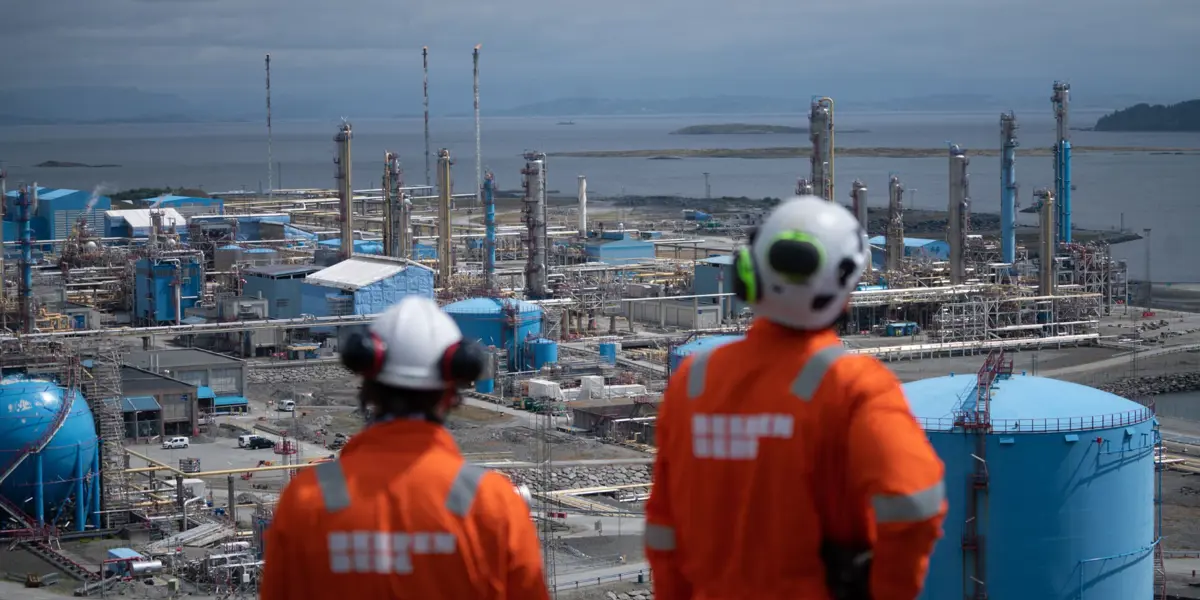
Beerenberg provides industrial insulation, fire protection, and surface protection solutions for plant assets where safety, energy efficiency, maintenance reduction, and long-term reliability are essential.
Overview
Solution overview
Beerenberg provides industrial insulation, fire protection, and surface protection solutions for plant assets where safety, energy efficiency, maintenance reduction, and long-term reliability are essential.
Key Applications
- Offshore & Onshore Plants
- LNG Facilities
- Petrochemical Plants
- Power Generation
- Industrial Process Facilities
Strengths
Why this solution matters
Industrial insulation solutions
Passive fire protection
Surface protection
Support for energy efficiency
Protection of critical plant assets
Key Numbers
Key criteria for plant asset protection
Beerenberg solutions should be introduced not simply as insulation materials, but as asset protection solutions that consider operating temperature, insulation thickness, moisture management, CUI risk, fire protection performance, and maintainability together.
-196 C to 650 C
Operating temperature range
Insulation coverage for both cold and hot service conditions.
Up to 70%
Thickness reduction
Possible thinner insulation design compared with conventional insulation materials.
1,500 mm
Product width
Blanket-type format suitable for large-area application.
74%
Total dust reduction
Reduced total dust emission based on comparative test data.
Aerogel Insulation Technology
Insulation material that combines low thermal conductivity and reduced thickness
Aerogel insulation is a high-performance insulation solution that can combine low thermal conductivity, reduced insulation thickness, hydrophobic performance, non-combustible characteristics, and flexible installation. It is especially useful when reviewing long-term plant operation, thickness optimization, and moisture management.
Insulation Thickness Comparison
Thinner insulation build-up can be reviewed under the same condition
Reference example: 8 inch pipe / 260 C
Aerogel
20T
Glass Fiber
60T
Mineral Wool
60T
Cellular Glass
90T
Perlite
100T
This visualization is a simplified web version of the insulation thickness comparison concept. Actual insulation thickness should be reviewed based on operating temperature, allowable heat loss, surface temperature, and site conditions.
Superior Thermal Performance
Low thermal conductivity helps reduce heat loss under demanding operating conditions.
Up to 70% Thickness Reduction
Thinner insulation build-up can be considered compared with conventional insulation systems.
Hydrophobic Performance
Hydrophobic properties help reduce moisture ingress and contribute to CUI risk reduction.
Non-combustible Material
Non-combustible characteristics can help reduce fire spread risk.
Flexible Installation
Flexible blanket-type material supports easier handling, transportation, and installation.
Lightweight & Compact
Lightweight and compact insulation design can improve site workability and space utilization.
Oryza Aerogel
Hot and cold insulation product lines for plant applications
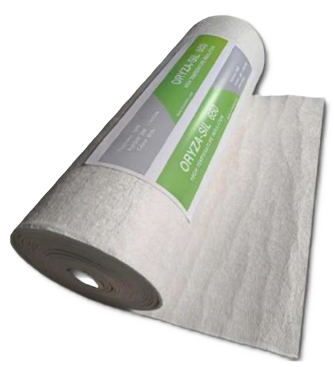
Oryza Aerogel can be divided into Oryza-Sil 650 for hot insulation and Oryza-LTG for cold insulation. Both product lines are introduced as blanket-type hydrophobic insulation materials with 1,500 mm width, and their application range should be reviewed based on operating temperature and project conditions.
Hot Insulation
Oryza-Sil 650
A hot insulation product line that can be reviewed for heat loss reduction, insulation thickness optimization, and CUI risk reduction for hot piping and equipment applications.
Operating Temperature
-165 C to 650 C
Thickness
3 / 5 / 10 / 20 mm
Surface Burning Characteristics
Flame spread index = 0 / Smoke spread index = 0
Cold Insulation
Oryza-LTG
A cold insulation product line suitable for piping and equipment where condensation control, moisture management, and insulation performance are important under cold and cryogenic service conditions.
Operating Temperature
-196 C to 450 C
Thickness
5 / 10 / 20 mm
Surface Burning Characteristics
Flame spread index <= 25 / Smoke spread index <= 50
Benefit / Effect
Reviewing ESG and cost reduction through insulation optimization
Insulation optimization is not only about reducing material thickness. It should be reviewed together with heat loss, energy cost, insulation waste, CUI risk, worker safety, and maintenance cost.
Net Zero
Optimized insulation design
Reduced heat loss can contribute to lower energy consumption and greenhouse gas emissions.
Waste Zero
Long-life insulation approach
Long-term insulation performance can help reduce replacement frequency and insulation waste handling burden.
Risk Zero
CUI and installation risk reduction
Moisture management, inspection accessibility, and installation efficiency can help reduce safety and maintenance risks.
ESG Impact
- Reduced insulation heat loss
- Reduced insulation waste
- Reduced safety and environmental incidents
Cost Impact
- Reduced energy cost
- Reduced replacement cost
- Reduced inspection and installation cost
Engineering Impact
- Operating condition review
- Site condition review
- Optimized insulation design review
CUI Risk Data
Moisture inside insulation increases heat loss and CUI risk
CUI: Corrosion Under Insulation
CUI refers to corrosion that occurs under insulation. When moisture remains inside insulation, thermal conductivity and heat loss can increase, and the long-term corrosion risk on pipe surfaces can become higher.
Beerenberg Approach
Aerogel-based insulation can help reduce the possibility of CUI by supporting hydrophobic and breathable insulation performance. If moisture still occurs, drainage, detection, and inspection systems can be reviewed together.
Example based on 4 inch pipe / 50T mineral wool insulation
The following data compares dry insulation and moisture-containing insulation. Actual project results may vary depending on site and operating conditions.
Review Item
Thermal conductivity
Dry Condition
0.031 W/mK
Wet Condition
0.0686 W/mK
Impact
Approx. 2.2x increase
Review Item
Heat loss
Dry Condition
20.04 W/m
Wet Condition
42.26 W/m
Impact
Approx. 2x increase
Review Item
Absorbed water mass
Dry Condition
0 g
Wet Condition
287 g
Impact
Reduced insulation performance and higher CUI risk
Prevent
Moisture ingress prevention
Insulation systems with hydrophobic and breathable characteristics help reduce conditions where moisture remains inside the insulation system.
Drain
Moisture drainage
Drainage concepts such as air gap and drain hole can be reviewed to help discharge internal moisture before it spreads further.
Detect
Early detection
Inspection plugs and CUI detectors can help identify the presence of moisture inside the insulation system at an early stage.
Inspect
Inspection accessibility
Designing for inspection and maintenance helps manage CUI risk during long-term plant operation.
Fireproofing Capability
Passive fire protection applicability for critical plant assets
Passive fire protection can be applied to structures, equipment, valves, flanges, and cable trays that may be exposed to fire scenarios. The applicable solution should be reviewed based on the project fire scenario and required standards.
Test / Reference Standards
Application Scope
Project Review Points
Conditions to review before selecting an asset protection solution
The applicable solution can vary depending on operating temperature, CUI risk, fire protection requirements, inspection strategy, and site installation conditions. IN-TECH supports the initial review between customer requirements and manufacturer-side technical review.
Operating temperature and required insulation thickness
CUI risk and moisture management requirements
Inspection and maintenance accessibility
Fire scenario and required fire protection performance
Shutdown limitation and site installation conditions
Project Inquiry
Need technical sourcing support for Beerenberg?
Contact IN-TECH to discuss product availability, project requirements, technical coordination, and proposal support.
Send Inquiry